Is DS-01® Daily Synbiotic Right For You?

The science of probiotics demands precision. In collaboration with leading scientists and research partners from around the world, we develop research-backed probiotics for outcomes across gastrointestinal, dermatological, oral, pediatric, and nutritional health.

For humans, by science.

Our process starts with microbial strain validation through biofermentation, stabilization, scale-up, and clinical research.

01

Strains

Fig.1 - Relative abundance by shotgun metagenomic sequencing for DS-01®

Probiotic Strain Validation

Our strain bank consists of probiotic strains with extensive mechanistic and clinical data generated at academic institutions and research partners around the world—including Italy, Spain, Belgium, US, and Japan. Our strains are deposited in the American Type Culture Collection (ATCC).

Strain Identity

We ensure complete transparency in strain identification, using whole genome sequencing to verify the genetic identity of each strain. This level of precision allows us to track strain-specific benefits and maintain the highest standards of quality control.
02

Biofermentation

Biofermentation

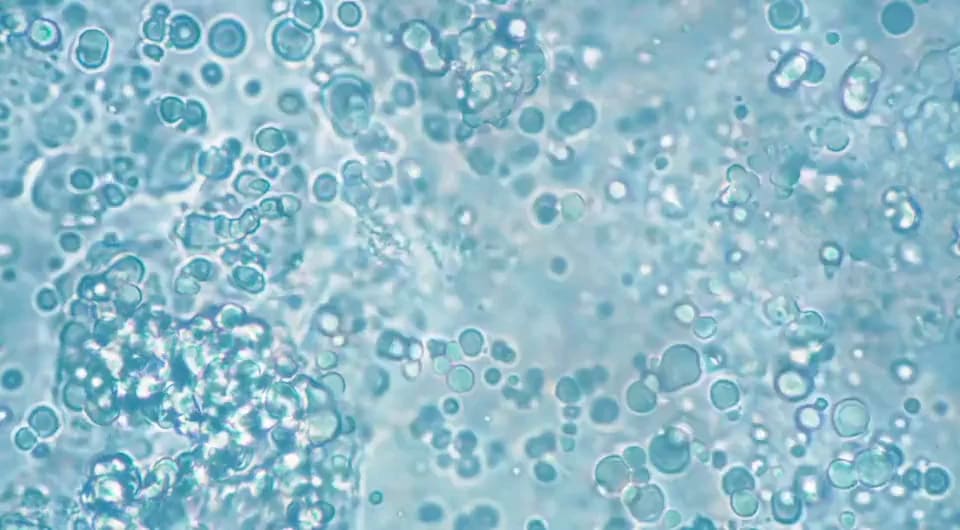
This—a metabolic process used by bacteria to generate energy for cell growth and multiplication—is how we culture our probiotic strains. Bacteria are sensitive. They must be cultured with care to ensure viability. We optimize biofermentation conditions for pH, strain purity, temperature, and 28 other factors.

03

Validation

Flow Cytometry

During this process, cells are selectively tagged with fluorescent "markers" and counted by a laser as they pass through a tube. In testing for AFU (Active Fluorescent Units), flow cytometry is used to calculate a more precise measurement of all viable, injured, and dead probiotic cells, including ones that are efficacious but not necessarily culturable (and therefore, would not be counted in a traditional plated colony forming units (CFU) measurement—what you’re probably used to seeing on probiotics labels).

Whole-Genome Sequencing

Our probiotics are among the first to undergo end-to-end, whole-genome testing—the application of nanopore and shotgun sequencing of microbial DNA to genetically validate each strain and species.

Clinical Research

We partner with leading academic research institutions and notable Primary Investigators to validate our rationally-designed probiotic formulations through double-blind, randomized, placebo-controlled clinical trials. Our human clinical work, in combination with strain-specific clinical research and our in vitro data generation, allows us to identify novel endpoints and benefits for human health, while contributing advancements to the fields of microbiome and probiotic science.

04

SHIME®

Simulator of the Human Intestinal Microbial Ecosystem (SHIME®)

Bacteria are fragile; they’re sensitive to heat, oxygen, light, water, and they don’t do well without protection from stomach acids or bile. With this in mind, we test our products in SHIME®, the closest system developed to model human digestion and the gut.

Fig.3 - To evaluate the survival of our probiotics, we use a Simulator of the Human Intestinal Microbial Ecosystem (SHIME®)—the closest system developed to model digestion and the gut. It recreates the physiological conditions and biological processes (food uptake, peristalsis, digestive enzymes, bile acids, and time spent in each step) representative of the human gastrointestinal tract.

05

Testing

  • Genomic sequencing and strain verification
  • Viability and potency testing at multiple timepoints
  • Contaminant screening and purity analysis
  • Stability testing under various conditions
  • Third-party verification and quality assurance

Our Scientific Board

Our Scientific Board consists of scientists, researchers, doctors, and authors across the fields of microbiology, immunology, genetics, metabolomics, gastroenterology, pediatrics, molecular biology, and transcriptomics—including primary investigators from the NIH’s Human Microbiome Project. They lead labs, teach at world-renowned academic institutions, and have among them 2800+ publications and over 140,000 citations in peer-reviewed scientific journals and textbooks.

Dr. Sarah Chen
Microbiologist, PhD
Dr. James Wright
Immunologist, MD PhD
Dr. Maria Garcia
Geneticist, PhD
Dr. Robert Kim
Research Director
Plastics
Honey Bees
Coral
Agriculture
Biomaterials
Awaken Within